전시 소개
Desert X AlUla 2026, 알울라 사막의 랜드아트
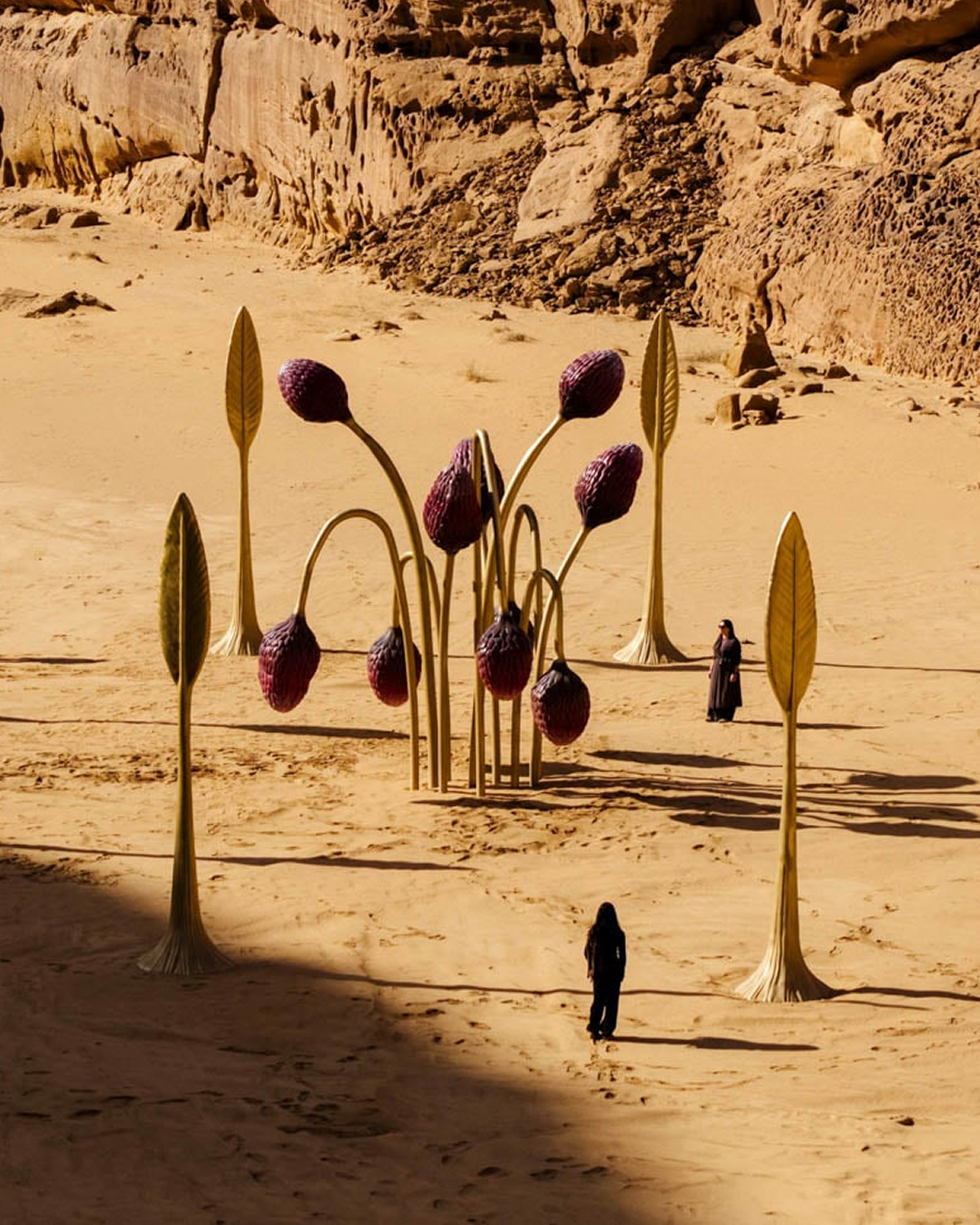
The Richest art, unfolding in the harshest place
: 가장 척박한 곳에서 펼쳐진 가장 풍성한 예술
[KR] 수천 년 동안 향신료 교역로와 순례길이 교차하던 알울라. 사우디아라비아 북서부의 이 고대 오아시스가 다시 한번 문화의 교차로가 됩니다. 오는 2월 28일까지 열리는 Desert X AlUla 2026(@_desertx)은 사막 협곡과 암석 지형을 무대로 11명의 국제 작가가 선보이는 랜드아트 비엔날레입니다.
올해의 주제는 'Space Without Measure(측정할 수 없는 공간)'. 레바논계 시인 칼릴 지브란의 시구에서 영감을 받은 이 테마는 끝없이 펼쳐진 수평선, 고대와 현재가 겹쳐진 시간의 지층, 그 모든 것을 품은 사막의 특성을 그대로 담아냅니다. 단순히 광활한 물리적 규모가 아니라, 시간과 기억이 뒤섞이는 비가시적 공간까지 아우르는 개념이죠.
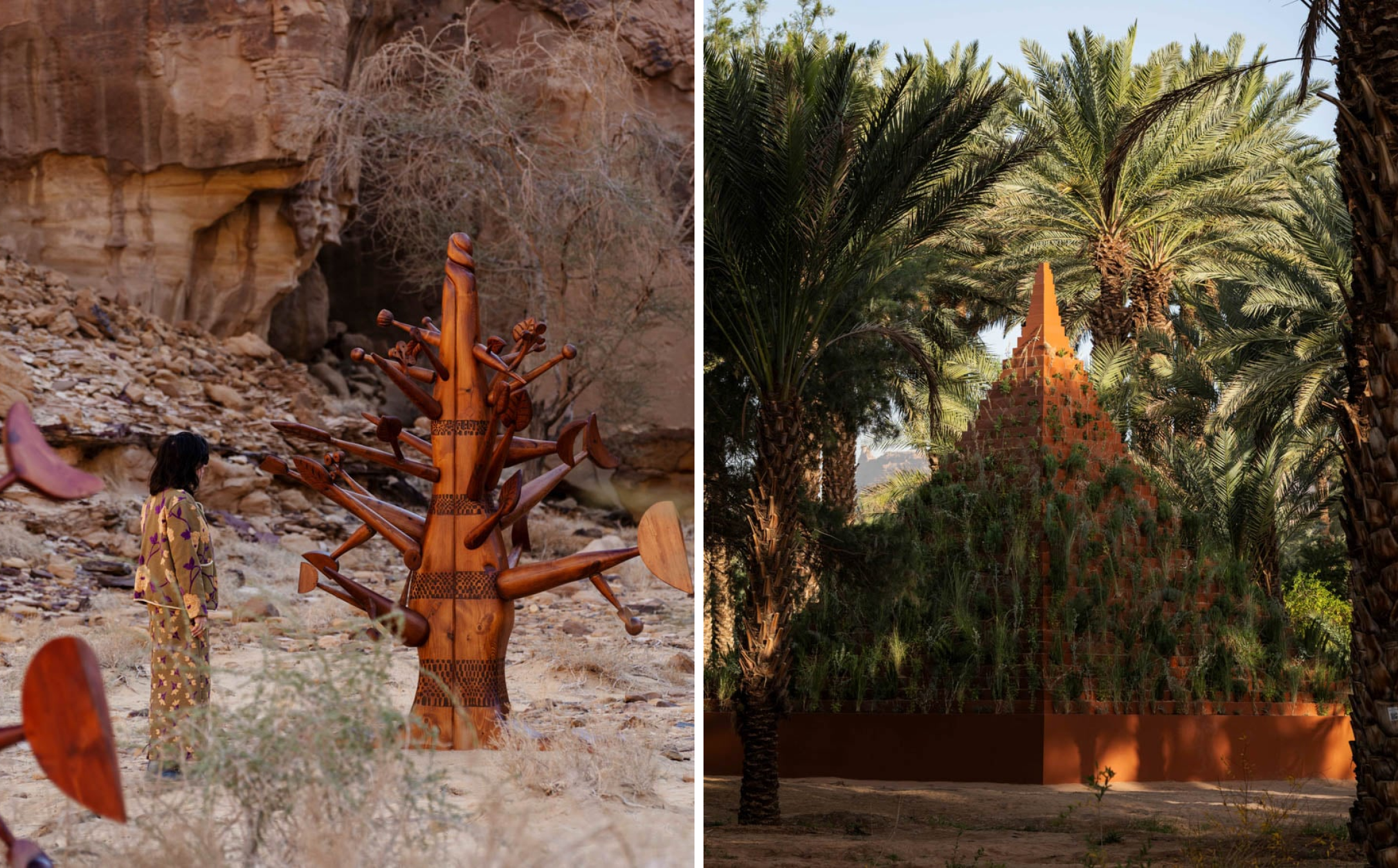
(left) 이브라힘 엘-살라히(Ibrahim El-Salahi), 하라자 나무(Haraza Tree)
(right) 아그네스 데네스(Agnes Denes), 살아있는 피라미드(The Living Pyramid)
주목할 작품은 아그네스 데네스의 '살아 있는 피라미드'입니다. 1970년대부터 생태적 랜드아트의 거장으로 활동해 온 그는 알울라 오아시스에 거대한 계단식 피라미드를 세우고, 그 안에 토착 식물을 심었는데요. 시간이 지나며 표면이 정원으로 변하는 이 작품은 기념비적 형태를 흙과 씨앗으로 채우며 영구성의 관념을 뒤집습니다.
수단 모더니즘의 거장 이브라힘 엘살라히의 '하라자 나무'도 눈길을 끕니다. 사막의 가혹한 환경에서 살아남는 아카시아 나무를 추상화한 조각군으로, 아프리카-아라비아 모더니즘의 언어를 알울라의 지형 위에 겹쳐 놓죠.
이 비엔날레의 진짜 매력은 작품을 '보러 가는' 경험이 아니라, 사막을 '통과하는' 여정 그 자체에 있습니다. 발로 협곡을 걷고, 오아시스 사이를 이동하며 작품을 찾아가는 일. 그 과정에서 우리는 거리를 숫자가 아닌 감각으로 측정하게 되지 않을까요?
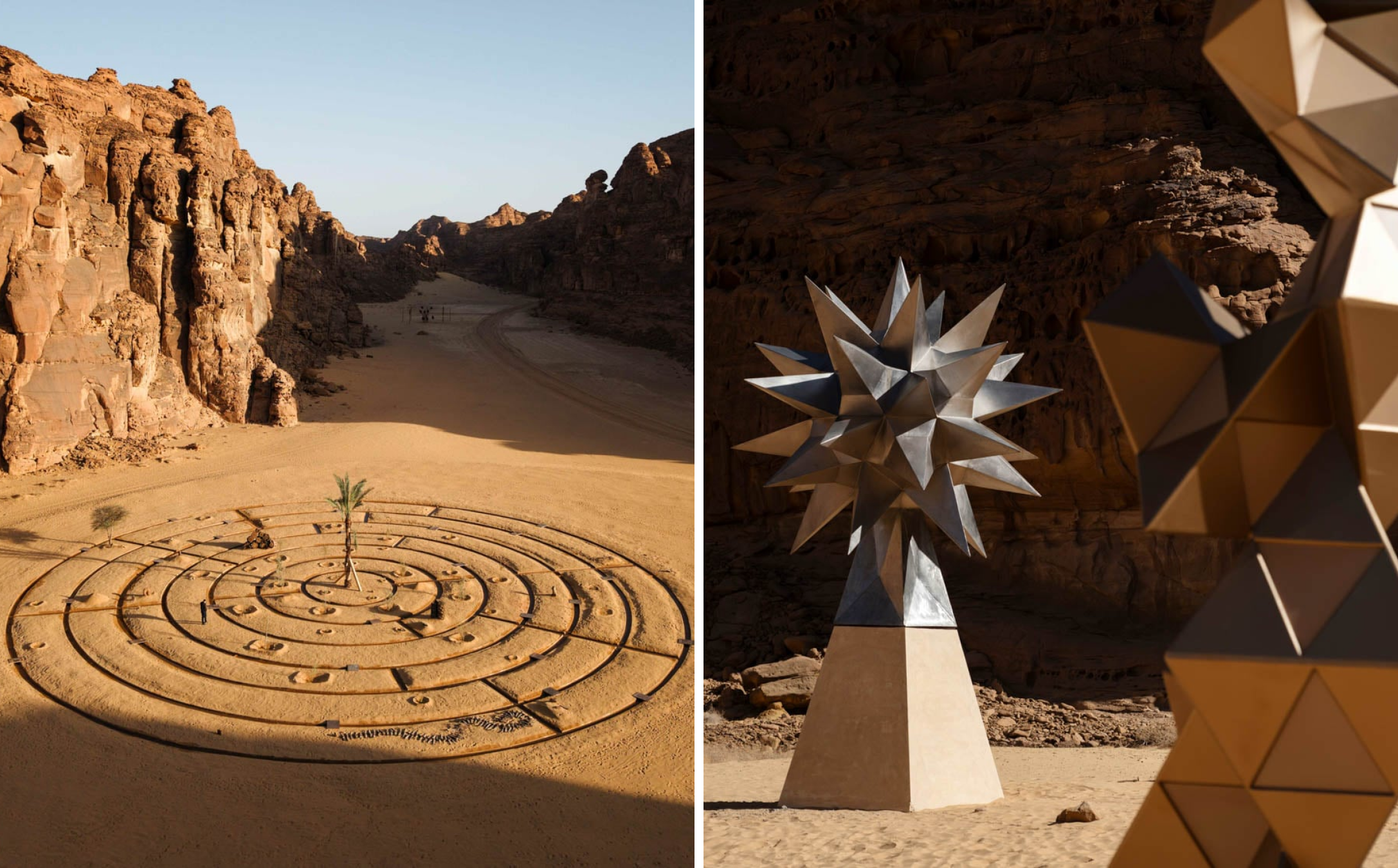
(left) 모하메드 알파라즈(Mohammad Alfaraj), 질문이 무엇이었나요?(What was the Question Again?)
(right) 모하메드 알살림(Mohammed AlSaleem), 가시(The Thorn), 알슈루프 유닛(AlShuruf Unit), 삼각형들(The Triangles), 꽃봉오리(Flower Bud), 알 아힐라(Al Ahilla) (리야드 왕립위원회 제공)
[EN] For millennia, AlUla has been where spice routes and pilgrimage paths converged. Today, this ancient oasis in northwestern Saudi Arabia is once again a cultural crossroads. Desert X AlUla 2026(@_desertx), running through February 28, is a land art biennial set amid desert canyons and rocky terrain, featuring works by 11 international artists.
Its theme, ’Space Without Measure,‘ inspired by a line from Lebanese poet Kahlil Gibran, evokes an unbroken horizon and layers of time where ancient and contemporary worlds overlap. It reaches beyond sheer physical scale into an invisible realm where time and memory mingle. Highlights include Agnes Denes’s <Living Pyramid>, a monumental stepped structure planted with native species that gradually becomes a living garden, quietly challenging ideas of permanence.
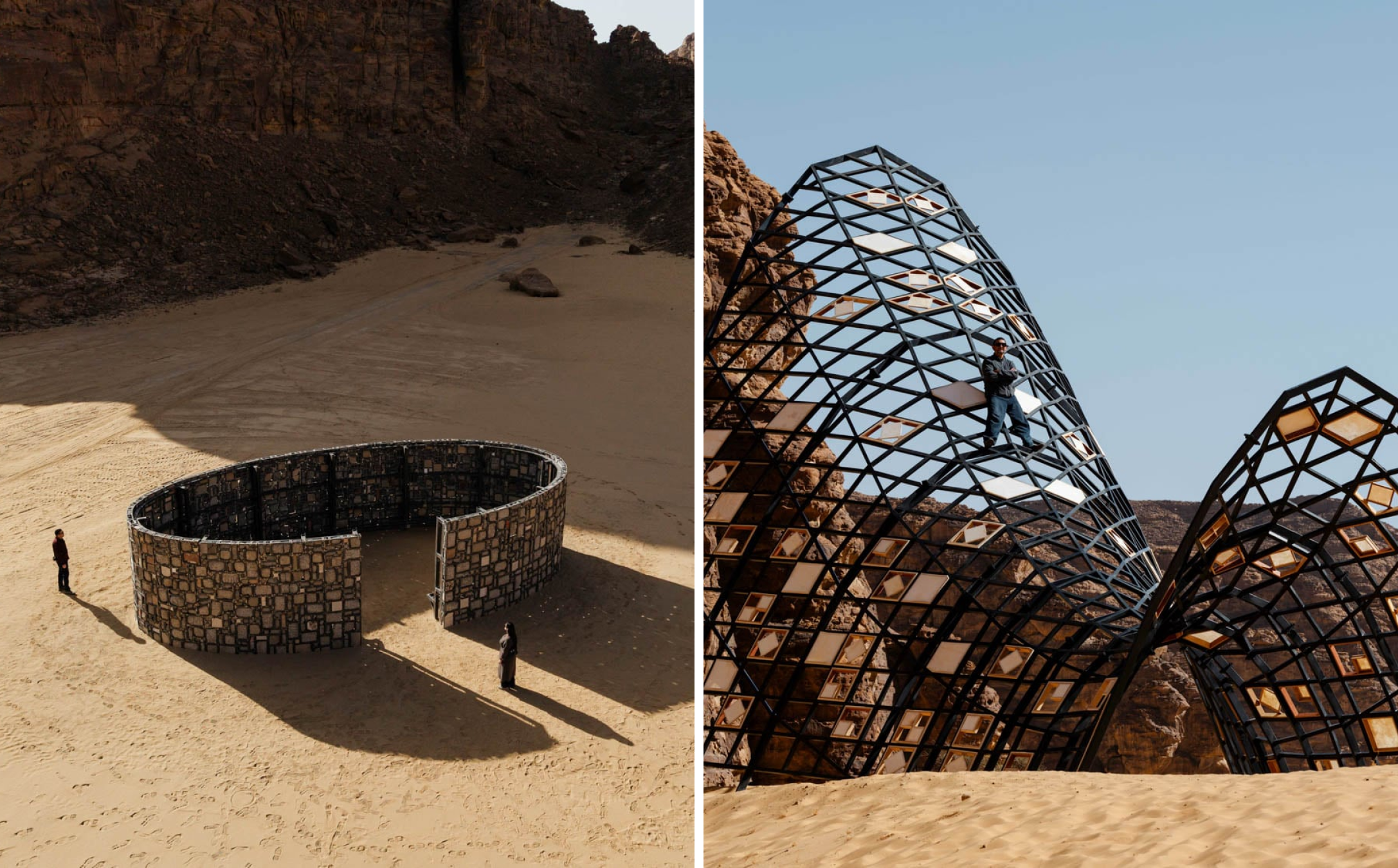
(left) 비바 갈호트라(Vibha Galhotra), 미래의 우화(Future Fables)
(right) 엑토르 사모라(Héctor Zamora), 타르 하이파(Tar HyPar)
Equally compelling is Ibrahim El-Salahi’s <Haraza Tree>, a sculptural abstraction of the resilient acacia that overlays the visual language of Afro-Arab modernism onto AlUla’s geology. Yet the biennial’s deeper allure lies not just in seeing artworks, but in traversing the desert itself—walking through the canyons, moving between oases, and slowly beginning to measure distance not in numbers, but in sensation.
Image. @_desertx